
The Pattern That Keeps Repeating
In the 1980s, American carmakers toured Toyota's plants in Japan. They wanted to understand why Toyota produced better quality at lower cost. Their hosts explained the system: Kaizen, Poka-Yoke, Kanban, Jidoka. A whole way of thinking about production, rooted in respect for the worker and fixing defects at the source.
The Americans listened. Then they bought robots.
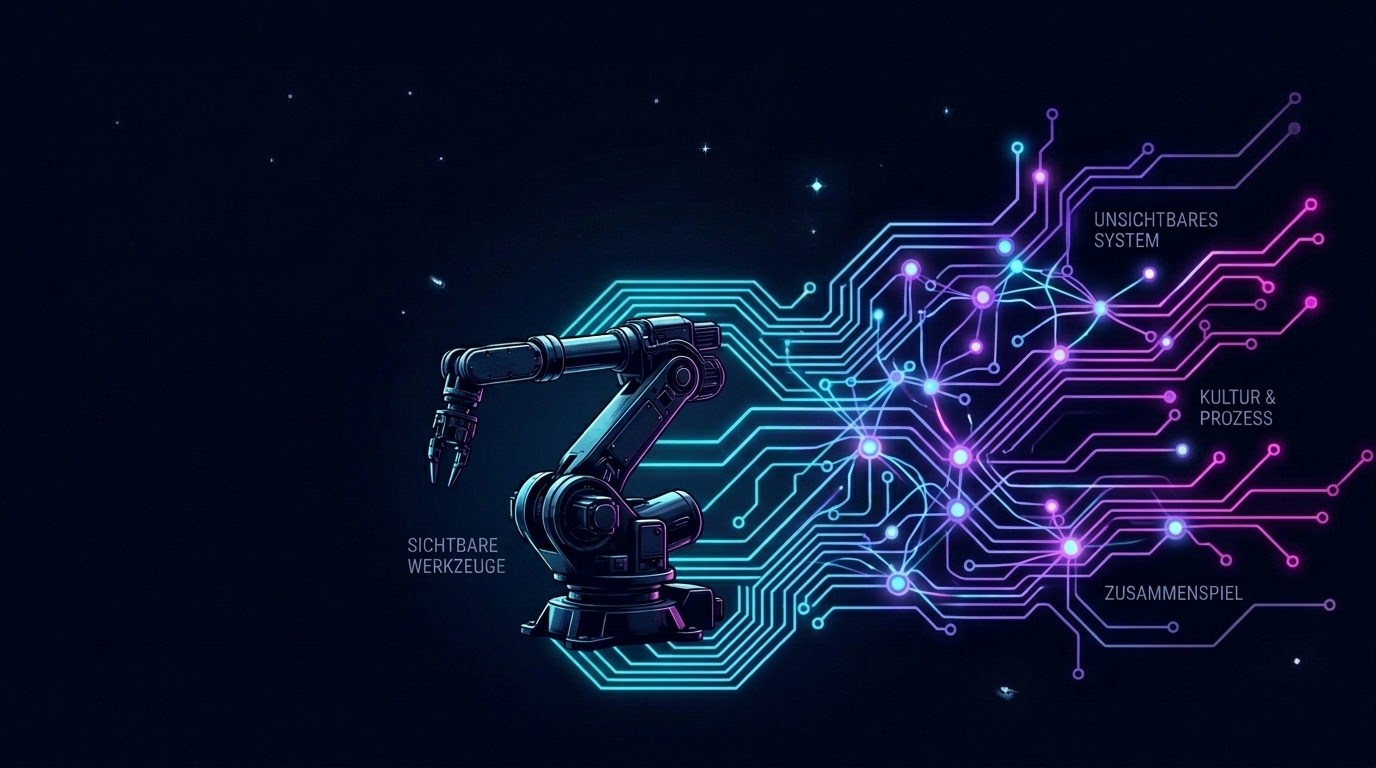
They had seen the visible artifacts, the automation, the clean floors, and concluded that those things were the source of Toyota's strength. What they adopted was the visible layer. What they missed was the invisible management system underneath it.
The result was billions spent on automation. Toyota was still more efficient.
NUMMI: The Proof Landed Hard
The clearest evidence came from the NUMMI experiment. Toyota and General Motors jointly ran a plant in Fremont, California. The same workforce GM had previously called one of its worst, high absenteeism, quality problems, constant grievances, hit results under Toyota's system that matched Toyota's best Japanese plants.
Same workers. Same building. Completely different results.
NUMMI had no advantage in machinery. It worked because the operating system for work was different: how problems were surfaced, how decisions got made, how people took ownership. Independent analyses put the productivity advantage at roughly 40 percent over traditional GM plants. Not from technology. From a different system.
Tools vs. System: The Distinction That Matters Most
Toyota was not great because Kanban cards hung on the walls. Toyota was great because the production system was built so that Kanban cards actually made sense inside it.
That distinction, between the tool and the system it lives in, is the most important idea for understanding what is happening in software development right now.
We have made this mistake once already in the software industry. With Agile. And we are making it again, with AI agents.
In the second part of this series, we look at how Agile became "AgileFall," and what that tells us about the current AI hype.
Who This Affects
- Software teams rolling out Claude Code, Codex, or other coding agents and seeing inconsistent results
- CTOs and tech leads who need to decide how AI agents fit into their development process
- Companies that want to become "AI-first" and don't know where to start
- Anyone currently searching for the "right AI tool" who might be asking the wrong question
Frequently Asked Questions
What does Toyota have to do with software development? The Toyota Production System is one of the most thoroughly documented examples of a mindset, not technology, making the decisive difference. The mistakes American manufacturers made when copying it keep repeating in other industries, software included.
Does this mean AI tools don't matter? No. Tools play a role. But no tool reliably delivers good results without the right system around it. Just as Kanban cards do nothing in a dysfunctional system, Claude Code delivers no consistent quality inside a badly defined process.
What exactly is Toyota's "invisible system"? The management philosophy: fix problems at the source instead of routing around them, empower every worker to stop the line when something is wrong, treat continuous improvement as a permanent job. You cannot copy that by buying something.
What mistake is the software industry making right now? Teams ask "which AI tool should I use?" instead of "what system do I need so I can trust the output of AI agents enough to ship it?" That is the same question, asked at the wrong level.
Is ex-nihilo affected by this too? Yes. We went through the same process ourselves, from autocomplete to real autonomous agents, and learned that the progress never depended on the tool. In the third part, we share specifically what we learned building Zedl.
What is NUMMI today? The NUMMI plant closed in 2010, after GM filed for bankruptcy. The building is now Tesla's main production site in Fremont, California.